Product Photography in Miami: A Studio Guide
Product photography is shooting your products in a controlled studio so the images sell them, on Amazon, your website, and in ads. In Miami it runs from about $110 an hour if you rent a studio and shoot yourself, up to a few hundred for a session with a photographer. Almost every product needs two kinds of shots: clean white-background images for listings, and styled lifestyle images for ads and social. The right studio does both in one booking.
If you sell online, you have probably hit the wall already: your white-background photos keep getting kicked back for not being white enough, or your shots look like they were taken on the kitchen table. Both problems come from the same place, a setup that cannot hold true, even light. A real studio fixes it, and this guide walks through exactly how, what it costs, and the two ways to book.
Key takeaways
- Most products need two shot types: white-background for marketplaces and lifestyle for ads and social. The pages that use both convert better than white-background alone.
- Amazon wants a pure white main image (RGB 255, 255, 255) with the product filling most of the frame. A lit cyclorama hits that consistently; a home lightbox usually does not.
- Rent the studio yourself from $110/hr, or book the in-house photographer in a package from $350.
- A simple white-background setup moves through roughly 10 to 20 products an hour. Reflective or styled items run slower.
- Shooting in person beats mailing your products away: you can fix an angle, swap a prop, or approve the color on the spot.
- The studio has a 25 by 20 foot cyclorama, six styled sets, professional lighting, and free parking, so you bring products and a shot list, not gear.
The two shots every product needs
Before you book anything, know what you are shooting. Almost every product sells on a mix of two formats, and the best listings use both.
White-background photography
This is the clean, product-on-white image that marketplaces require. Amazon asks for a main image on a pure white background, technically RGB 255, 255, 255, with the product filling about 85 percent of the frame. Get it wrong and the listing gets suppressed. You can read Amazon's image requirements for the full spec. The hard part is that a true white is built with light, not with a white wall or a cheap lightbox, which is why so many do-it-yourself shots get rejected. A properly lit cyclorama solves it, which is the next section.
Lifestyle photography
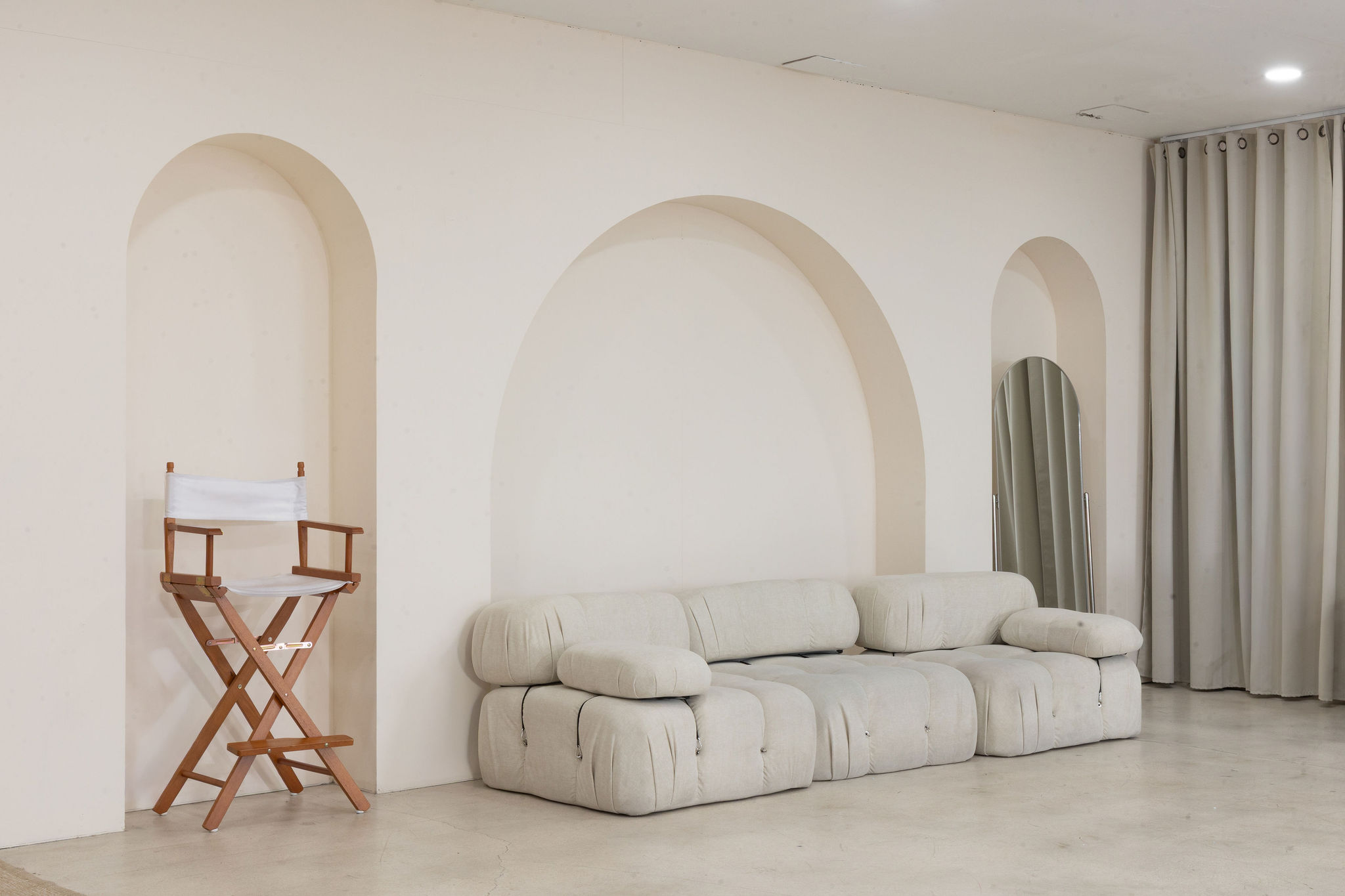
This is your product in a real scene, on a styled shelf, a kitchen counter, a desk, in someone's hands. It shows scale and use and gives your ads and social feed something with mood. The data is consistent that product pages pairing lifestyle images with clean white shots convert better than white-background images on their own, which is why most brands shoot both. With six styled sets in one studio, you build those scenes without renting props or scouting a location.
Flat lay and detail
The third format is the overhead flat lay and the tight detail shot, for texture, ingredients, materials, and small goods like jewelry and cosmetics. These shoot on the same cyclorama or on a styling surface, usually in the same session as the other two.

Rent the studio, or book the photographer
Two people search for product photography, and they want opposite things. One wants the room. One wants the photos. The studio serves both.
Rent the studio yourself, from $110/hr. You shoot your own products, or you bring your own photographer. You get the full private space with everything set up: the cyclorama, the styled sets, professional lighting, and the props. This is the path for sellers with a camera and an eye, brands with an in-house team, and photographers who just need a real space for a client. If you are batching a lot of products, renting by the hour almost always beats paying per image.
Book the in-house photographer, packages from $350. You show up, direct the look, and leave with finished photos. Our photographer plans and shoots the session in the same space. Packages run from the Mini Moment at $350 to the Campaign at $1,200, with the Essential, the Signature, and the Editorial in between. This is the path for brands and sellers who do not shoot themselves, or who have tricky products that need an experienced hand.
| Photoshoot package | Price |
|---|---|
| The Mini Moment | $350 |
| The Essential | $500 |
| The Signature | $750 |
| The Editorial | $1,000 |
| The Campaign | $1,200 |
Plenty of brands do both. They book the photographer for the first run and the hard products, then rent the space later to shoot new arrivals themselves. If you already have a photographer, rent the room. If you want the photos handled, book a package. See current rates on the rates page.
White backgrounds on the cyclorama
The single most useful piece of studio gear for product work is the cyclorama wall. It is a curved wall that bends into the floor with no corner, so there is no shadow line and no seam to retouch out. Lit correctly, it gives you a clean, even white that holds the same across every shot, which is exactly what a marketplace main image and a consistent catalog need.
Ours is 25 by 20 feet, large enough that you are not crowding a tabletop. That matters for two reasons. It handles oversized products that a lightbox cannot, from furniture to fitness gear to large appliances. And it keeps the light even across a full setup, so the tenth product in your batch matches the first. A bare white wall meets the floor at a hard corner that catches shadow, and a roll of paper wrinkles and tears, which is why a built cyclorama is the standard for high-volume product photography.
How a product shoot works here
The process is simple by design, whether you rent the room or book the photographer.
- Book your time. Reserve online from $110/hr on a weekday, or pick a package for a multi-product run.
- Bring your products and a shot list. Bring the items, any packaging you want in frame, props specific to your brand, and a short list of the angles you need. The lighting, backdrops, and props are already here, so there is no gear to haul.
- Shoot white, then lifestyle. Start on the cyclorama for the clean marketplace shots, then move to a styled set for the lifestyle looks, all in one booking. No second location, no reshoot day.
- Leave with your files. You take your images and run your own edit, or, if you booked a package, the in-house photographer handles the shoot and you receive the finished set.

How many products can you shoot in a session?
This is the question that decides your budget, and almost no guide answers it. The honest math depends on the product and how many angles you need.
A simple, clean product photographed straight on moves fast, roughly 10 to 20 finished shots an hour once the light is set. Products that need several angles, careful styling, or reflective-surface control, like glass bottles or jewelry, run slower, closer to 3 to 8 an hour. Apparel that needs steaming and laying out sits in between. As a rule of thumb, a two-hour booking comfortably covers 15 to 30 simple products, and a four-hour block handles a bigger catalog or a mixed shoot with both white-background and lifestyle looks. The more you batch into one session, the lower your cost per image, because the lighting is already dialed in.
Product photography by category
Different products have different demands. Here is what each one needs, and how the studio handles it.
Apparel and accessories. Flat lay on the cyclorama, on a mannequin for a ghost-mannequin look, or on a model in a styled set. The open space and even light keep colors true across a full collection drop.
Beauty and skincare. Reflective bottles, jars, and glass are the trickiest products to shoot, because every light source shows up on the surface. Controlled studio lighting and diffusion tame the reflections, and a close-up detail pass captures texture and ingredient callouts.
Jewelry and small goods. Tight detail work where focus, light, and a clean background are everything. The cyclorama gives a seamless field, and macro setups capture the fine detail buyers zoom in on.
Food and beverage. A clean packaging shot for the label and listing, plus a styled set that makes it look good enough to eat. Fresh or perishable items are a strong reason to shoot in person rather than mail product to a service.
Home and decor. Larger items that need room and a styled context. The six sets stand in for real interiors, and the cyclorama handles the clean catalog shot of the same piece.
What makes a product photo actually sell
Sharp and well-lit is the floor, not the goal. A few things separate photos that convert from photos that just look fine.
Consistency. A catalog where every product sits at the same scale, angle, and brightness reads as one brand and builds trust. A fixed studio setup produces that match across fifty products. An outdoor or location shoot, where the light shifts cloud to cloud, cannot.
Marketplace specs. Each platform has its own rules. Amazon wants the pure white main image and supports additional angles and infographics. Shopify and your own site reward lifestyle and detail. Instagram and ads want square and vertical crops. Shoot with a little extra room around the product so one frame covers every crop.
The full set. A strong listing is not one photo. It is the clean hero, a few angles, a scale or in-use shot, a detail, and a lifestyle frame, so the image gallery answers every question a buyer has before they read a word.
Miami weather, handled. From June through October, afternoon storms roll in most days, so an outdoor product or lifestyle shoot is a gamble. A studio session does not care what the sky is doing, and at 24/7 access you can shoot a morning, an evening, or a deadline day.
Why Miami brands shoot in person, not by mail
A lot of product photography now runs on a mail-in model: you ship your products to a studio in another city and watch on a screen. It can work for simple items, but you give up the thing that fixes most shoots, which is being in the room.
In person, you catch the problem before it becomes a reshoot. The label is crooked. The cap sits at the wrong angle. A reflection lands across the logo. Those are thirty-second fixes when you are standing there, and a week of back-and-forth when you are not. You can swap a prop, approve the color on the spot, and run a second take the same hour instead of waiting days for files to come back wrong.
In person also matters for what you are shooting. You should not mail fragile glass, high-value jewelry, perishable food, or anything that has not cleared customs, and you cannot mail a piece of furniture or a large appliance to a lightbox at all. Miami has a dense base of consumer brands that run into exactly this, in beauty and skincare, food and beverage, fashion and swimwear, and the wave of Amazon and Shopify sellers across the metro. For all of them, a central studio with free parking and a ground-floor load-in, a short drive from every Miami neighborhood, beats shipping product across the country. You can see the space in the studio gallery.
Frequently asked questions
How much does product photography cost in Miami?
It depends on whether you rent the space or hire a photographer. Studio rental starts at $110 an hour on weekdays and $130 on weekends, all-inclusive, and you shoot your own products. Photoshoot packages with the in-house photographer run from $350 to $1,200. Batching more products into one session lowers your cost per image.
What is the difference between white-background and lifestyle product photography?
White-background photography isolates the product on a clean white field, the format marketplaces like Amazon require for the main image. Lifestyle photography places the product in a styled scene to show it in use. Most brands shoot both, because pairing them converts better than white-background images alone.
Do I need to hire a photographer, or can I rent the studio myself?
Either works. You can rent the studio from $110 an hour and shoot your own products or bring your own photographer, or book a package from $350 and our in-house photographer runs the session. The space and gear are the same on both paths.
How do I get a pure white background that Amazon will accept?
You light it, you do not just shoot against a white wall. A pure white main image means RGB 255, 255, 255, which you reach by lighting the background separately from the product on a seamless surface like a cyclorama. A home lightbox usually photographs as light gray, which is why those images get rejected.
How many products can I shoot in a two-hour session?
About 15 to 30 simple products, depending on how many angles each one needs. Clean, straight-on items move at roughly 10 to 20 an hour, while reflective or styled products run slower. A shot list keeps the session efficient.
Does the studio have a cyclorama wall for white-background shots?
Yes, a 25 by 20 foot cyclorama, one of the largest in a private Miami rental studio. The seamless floor-to-wall curve gives a clean, shadow-free white background and handles everything from small goods to oversized products.
Can I bring my own lighting and equipment?
You can, but you do not need to. Professional lighting, backdrops, the cyclorama, styled sets, and a props library are included with the rental. Most clients bring only their products and a shot list.
What should I bring to a product shoot?
Bring your products cleaned and ready, any packaging you want in frame, brand-specific props, and a shot list of the angles you need. For styled work, a reference image of the look you are after helps. For apparel, a steamer if you have one.
Is it better to shoot in a studio or mail my products to a service?
In person is better for anything that is fragile, valuable, perishable, large, or where the look matters. Being in the room lets you fix angles, swap props, and approve color on the spot, instead of waiting days for files that might come back wrong. Mail-in can work for simple, durable products.
Is the studio available on weekends and evenings?
Yes, the studio is open 24 hours a day, seven days a week. Weekday rental is $110 an hour and weekend is $130, with free parking and private access on every booking.
Ready to shoot your products?
Check availability and book a session, or compare hourly rates and packages on the rates page. Creative Canvas Photo Studio Miami is a private 3,000 sq ft studio in Glenvar Heights with a 25 by 20 foot cyclorama, six styled sets, professional lighting, and free parking, rated 5.0 across 400+ reviews. Bring your products, we have the rest.
Book Your Studio Session
Rent the private 3,000 sq ft studio and its 25x20 cyclorama wall from $110/hr, or book a Photoshoot Package and our in-house photographer shoots it for you, from $350. Free parking, open 24/7, central to every Miami neighborhood.