How to Choose a Photography Backdrop
Choosing a photography backdrop comes down to four things: the type of shoot, the size of your subject, the color you want behind them, and how much you want to fix in editing. This guide covers every backdrop type and when to use each. And if you would rather not buy, store, or steam any of it, Creative Canvas Photo Studio Miami keeps a 25 by 20 foot cyclorama, color seamless paper, and styled sets on site, lit and ready, from $110 an hour.
Key takeaways
- Material decides durability and look: seamless paper, muslin, vinyl, canvas, and a cyclorama wall each suit different shoots.
- Gray is the most versatile color. White reads clean but needs its own light, and black adds drama.
- A white backdrop looks gray unless you light it separately from your subject.
- Size matters: full-length shots need a backdrop at least 9 feet wide, plus floor coverage.
- Buying pays off only if you shoot often. Otherwise a studio that already owns every backdrop, lit and set up, is the cheaper path.
- CC Studios has them all on site from $110 an hour, or book the in-house photographer from $350.
Why the backdrop matters more than people expect
The background does quiet but heavy work in a photo. It sets the mood, keeps attention on your subject, and decides whether an image reads as professional or improvised. A clean sweep behind a product makes it look like a real catalog shot. A warm styled set makes a personal brand feel approachable. Get the backdrop wrong and no amount of editing fully saves the frame, so it is worth a few minutes to choose on purpose.
The main backdrop materials, and when each one works
Most backdrops fall into a handful of materials. Here is what each does well and where it falls short.
| Material | Best for | The catch | Reusable |
|---|---|---|---|
| Seamless paper | Clean portraits, product, headshots, color pops | Tears and scuffs, so you cut off and replace sections | Partly, by re-pulling |
| Muslin (fabric) | Textured, lifestyle, and portrait looks | Wrinkles unless stored rolled and steamed | Yes, lasts years |
| Vinyl | Newborn, food, and messy or wet shoots | Reflects light and shows marks | Yes, wipes clean |
| Canvas (hand-painted) | Editorial and fine-art portraits | Heavy and a higher price | Yes |
| Cyclorama wall | Full-body, fashion, groups, video | Built into a studio, not portable | Permanent |
Seamless paper is the standard for a clean background in any color. It is a wide roll that pulls down from wall to floor with no visible seam, which is why product and headshot shooters reach for it first. Muslin and canvas add texture for portraits, with canvas the more premium option. Vinyl holds up to spills and small feet, which is why newborn and food shooters like it.
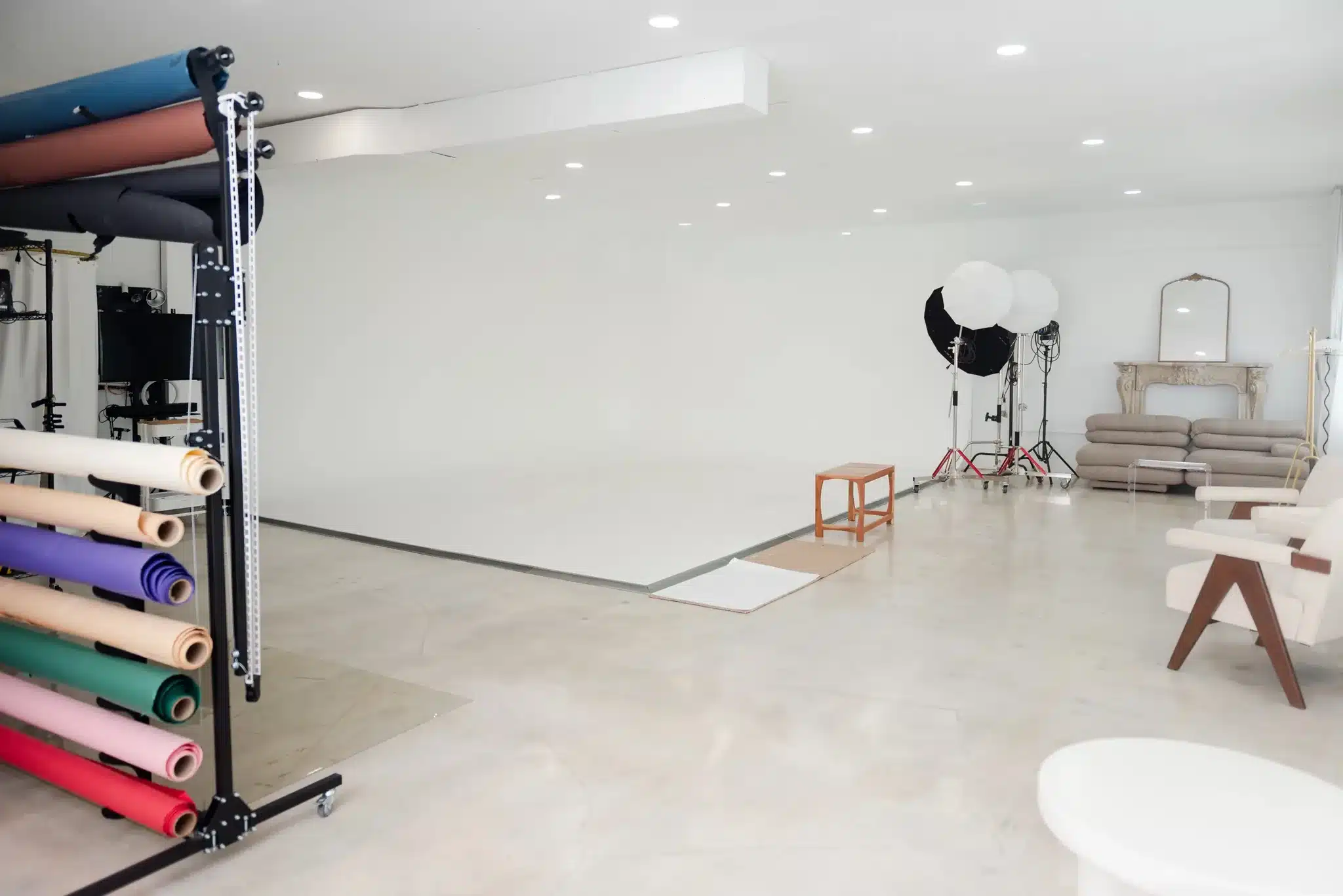
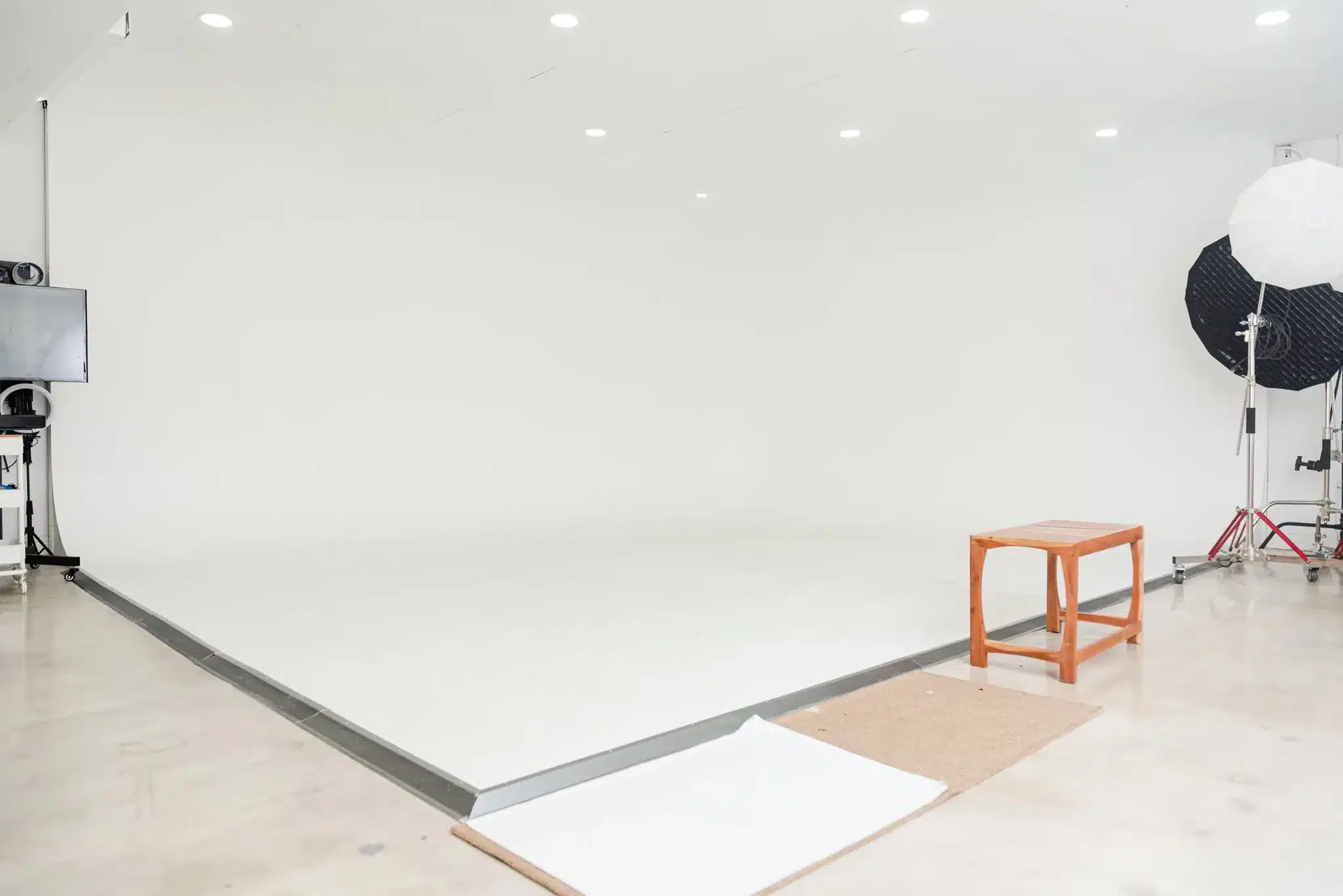
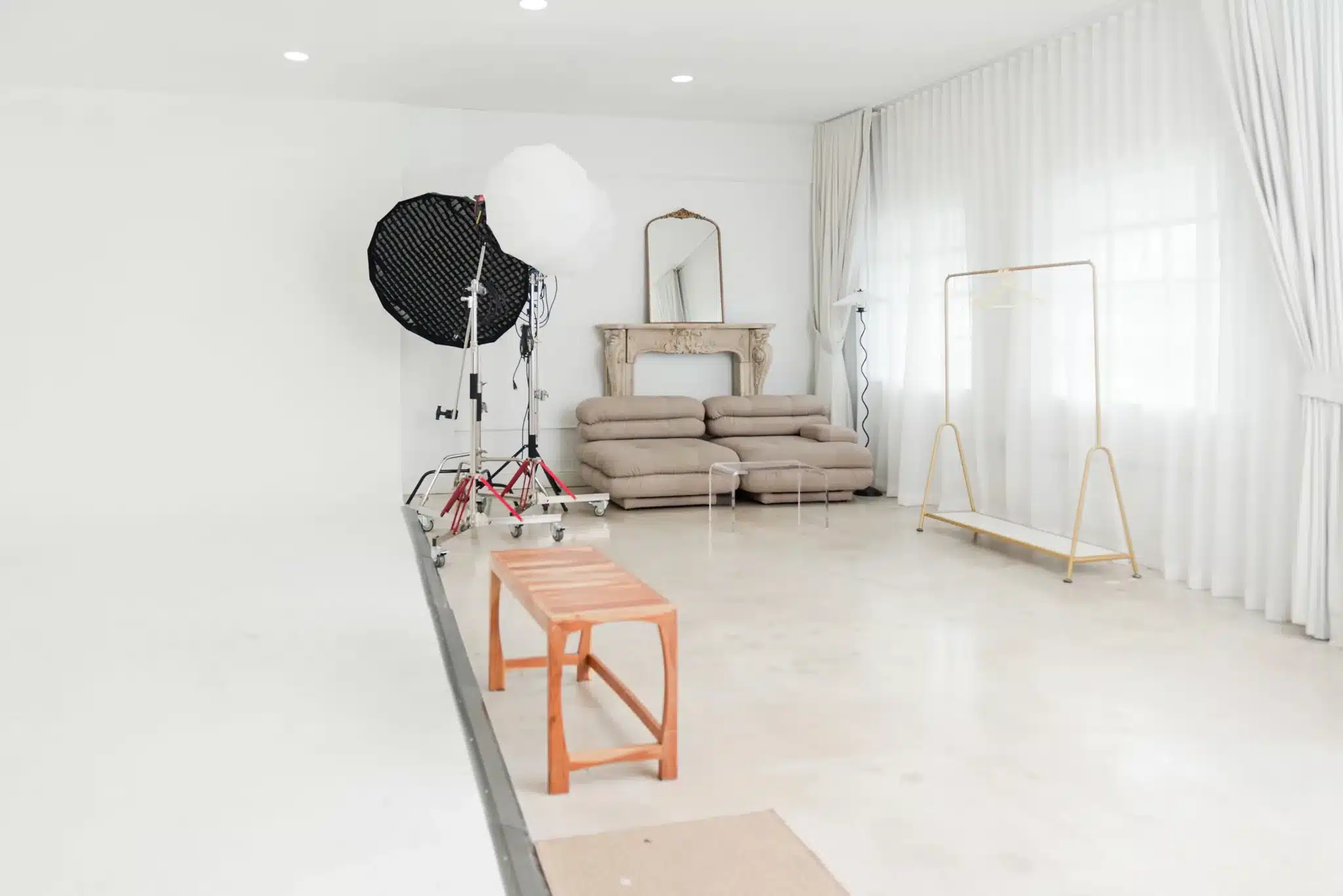
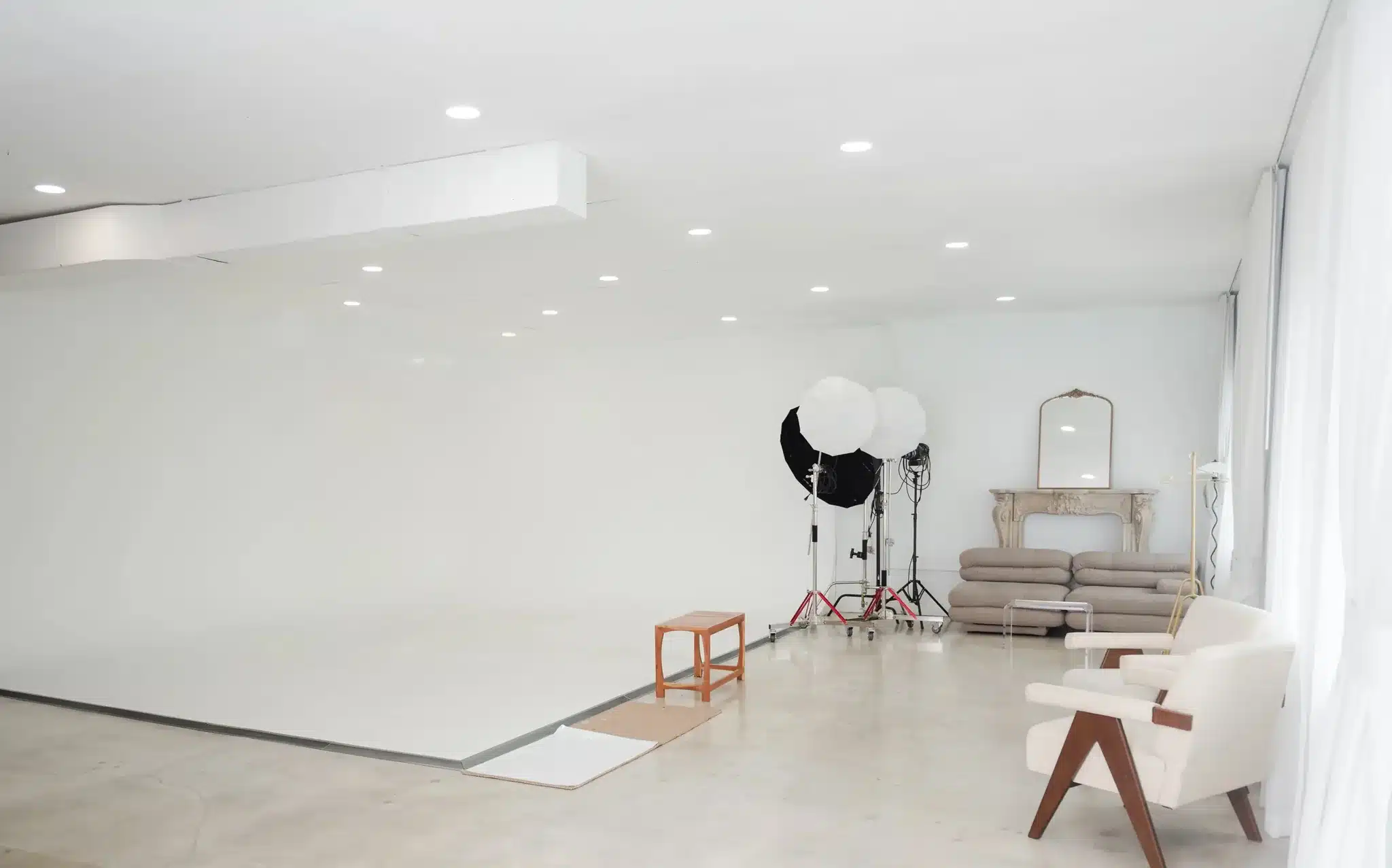
A cyclorama wall is the one most people picture as the seamless white studio look. It is a curved wall with no corner where the floor meets the wall, so the background runs to infinity with no horizon line. You cannot buy and store one, since it is a built part of a studio. CC Studios has a 25 by 20 foot cyclorama wall, in matte white or painted to a custom color, including green for chroma key work. In a rental studio, every one of these backdrops is included in your booking, so you choose on the day instead of owning anything.



Do not overlook styled sets
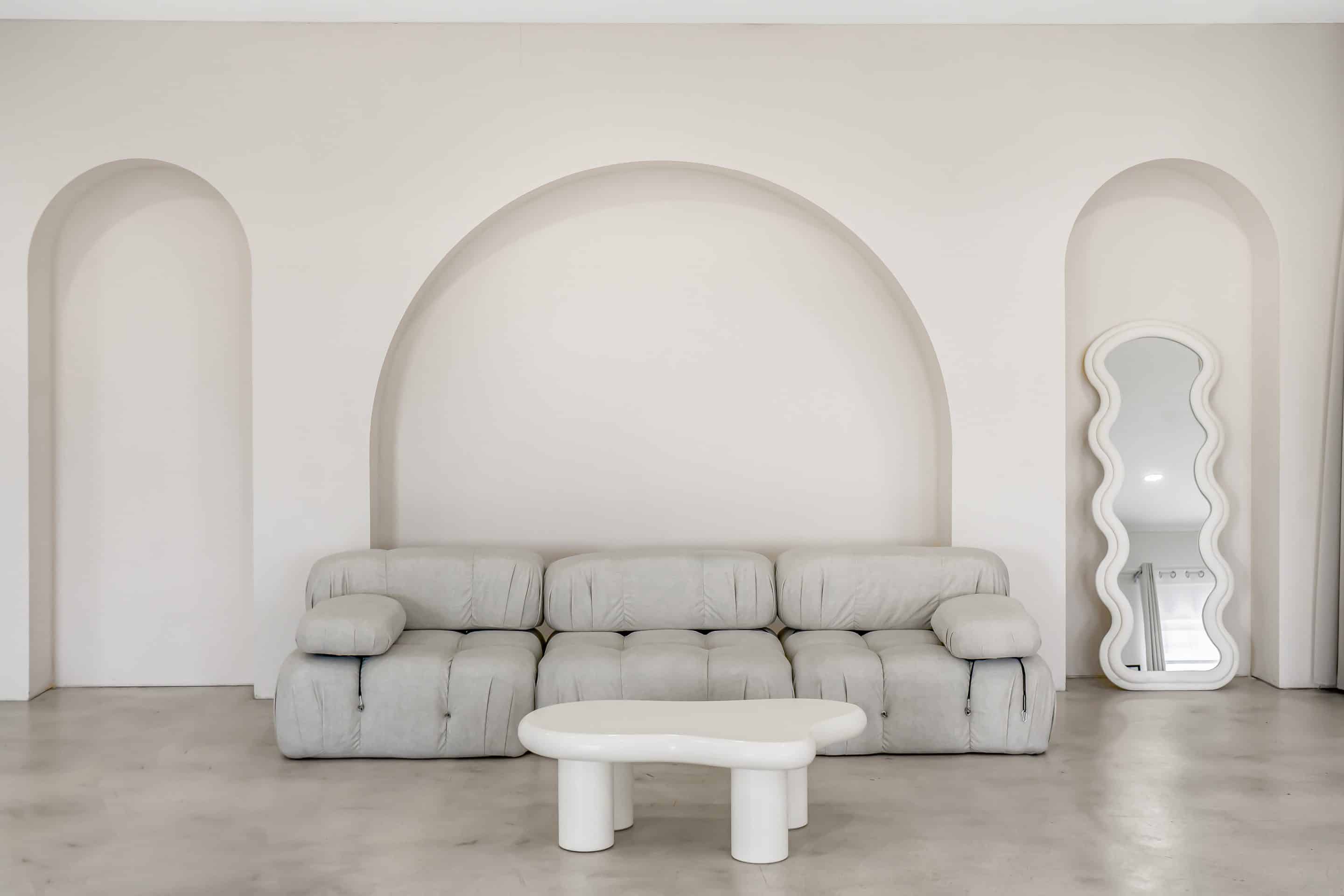
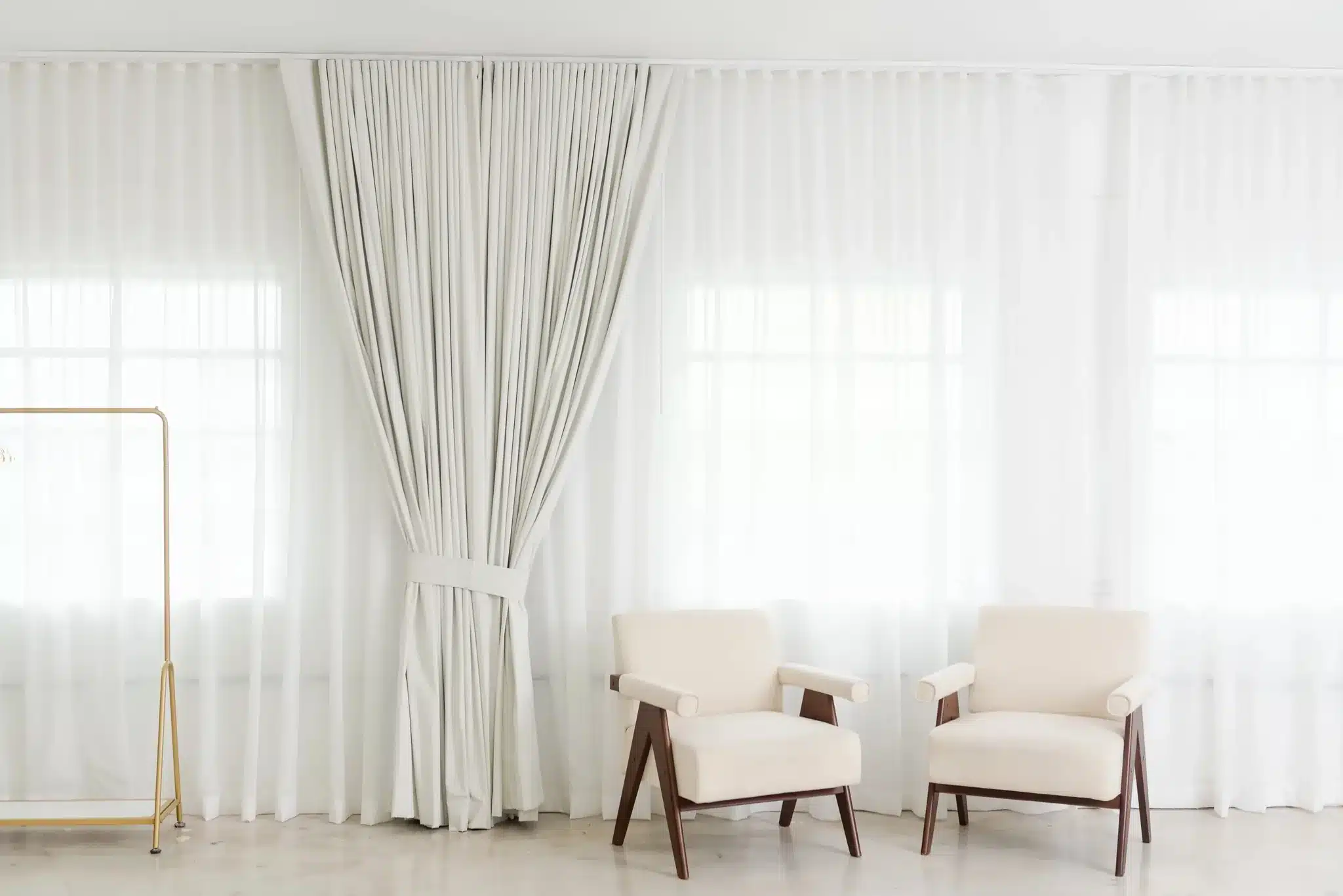
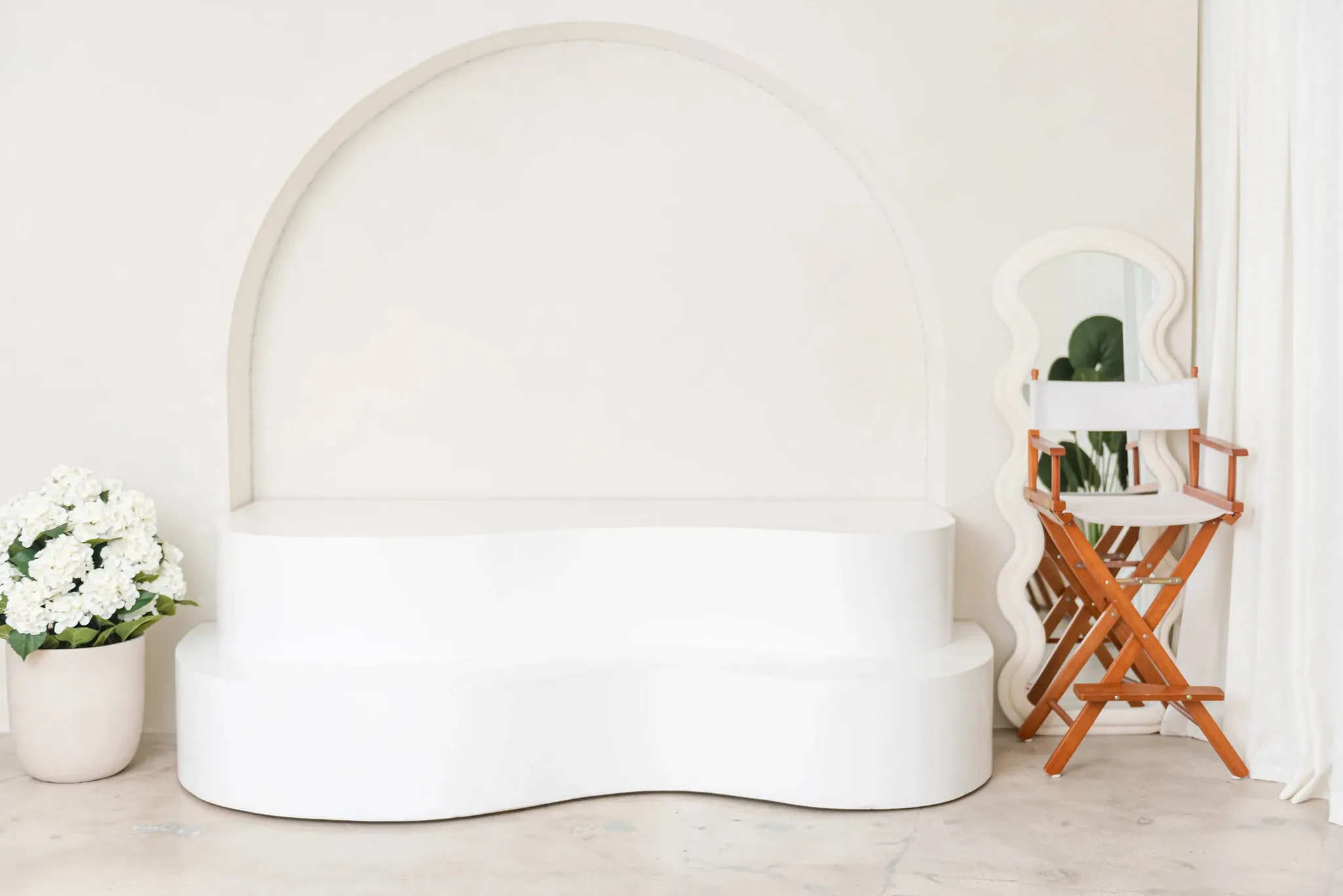
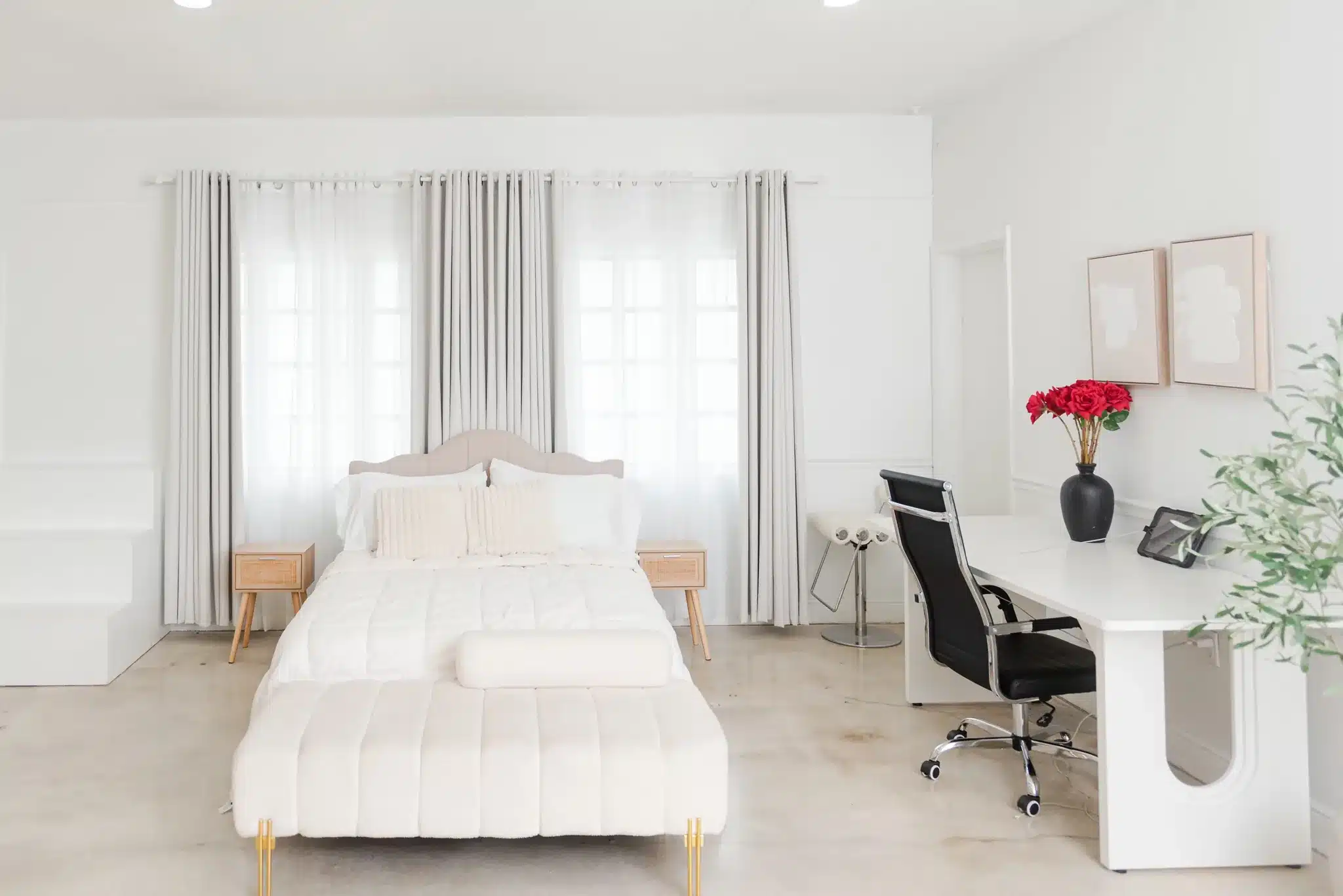
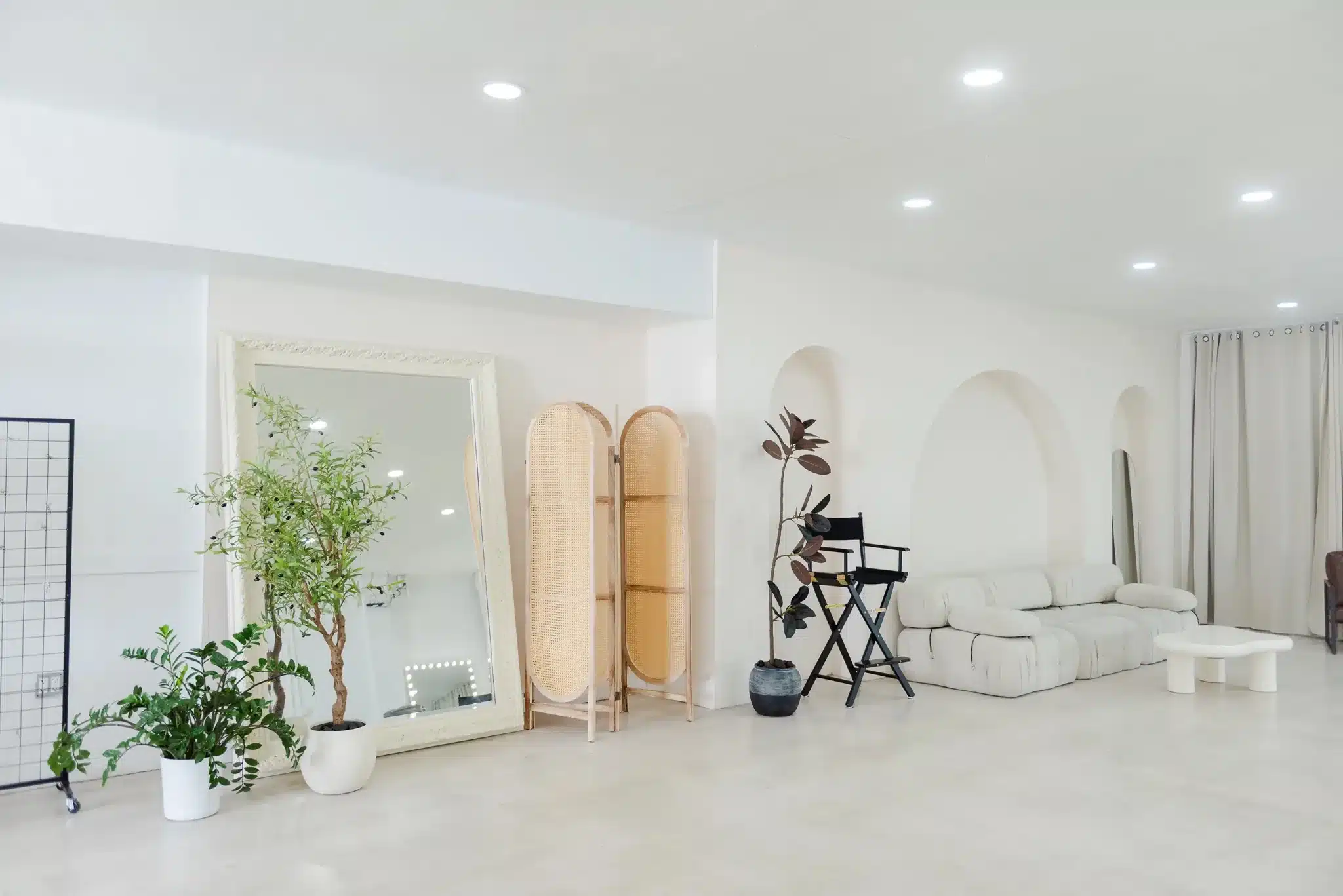
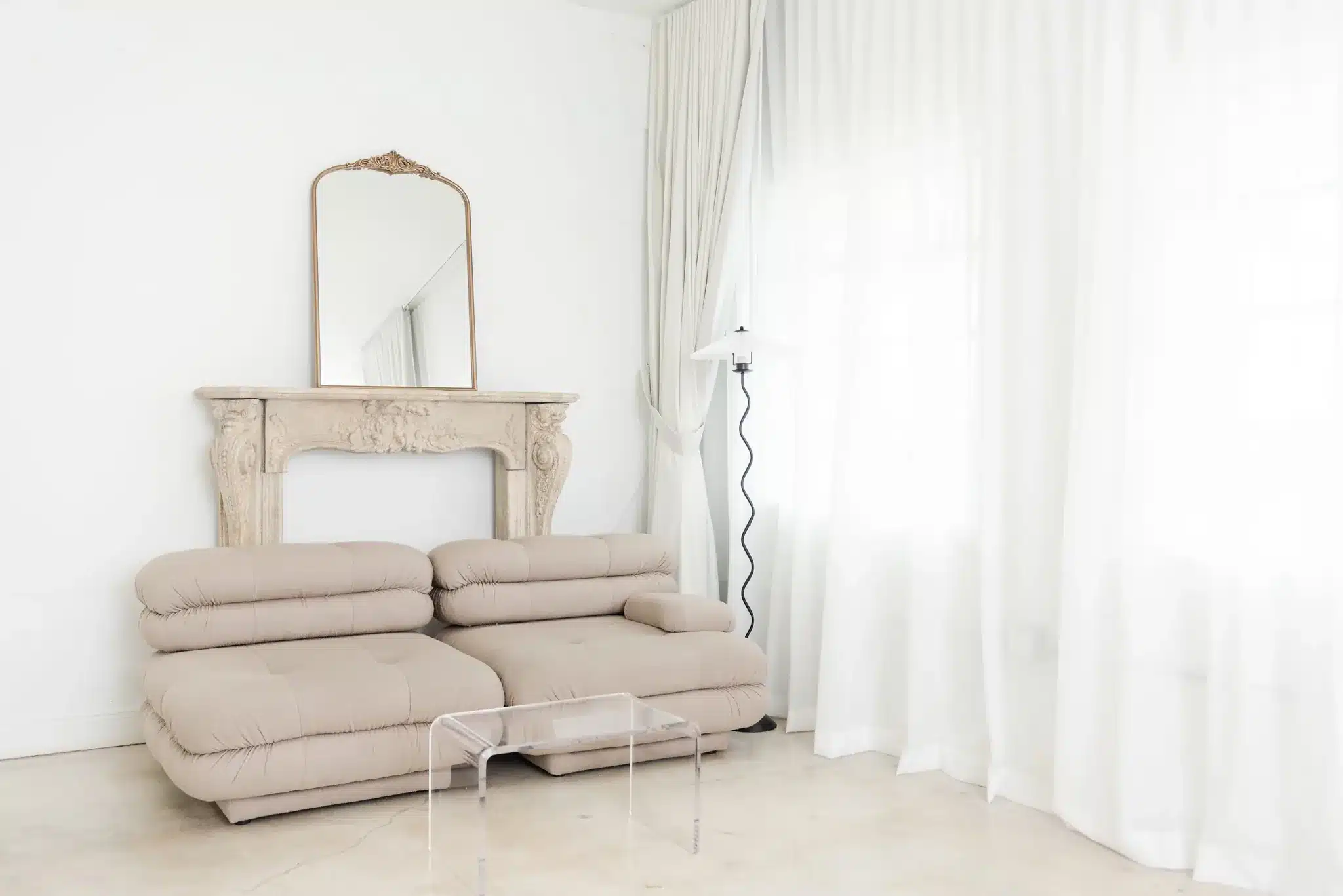
There is a sixth kind of backdrop that the gear guides skip: the styled set. An arches set, a natural-light lounge, a furnished lifestyle corner, and a props library all act as backdrops, and they create a sense of place that a flat color cannot. Personal branding clients, content creators, and editorial shoots lean on these because the photos look like a real room, not a wall.
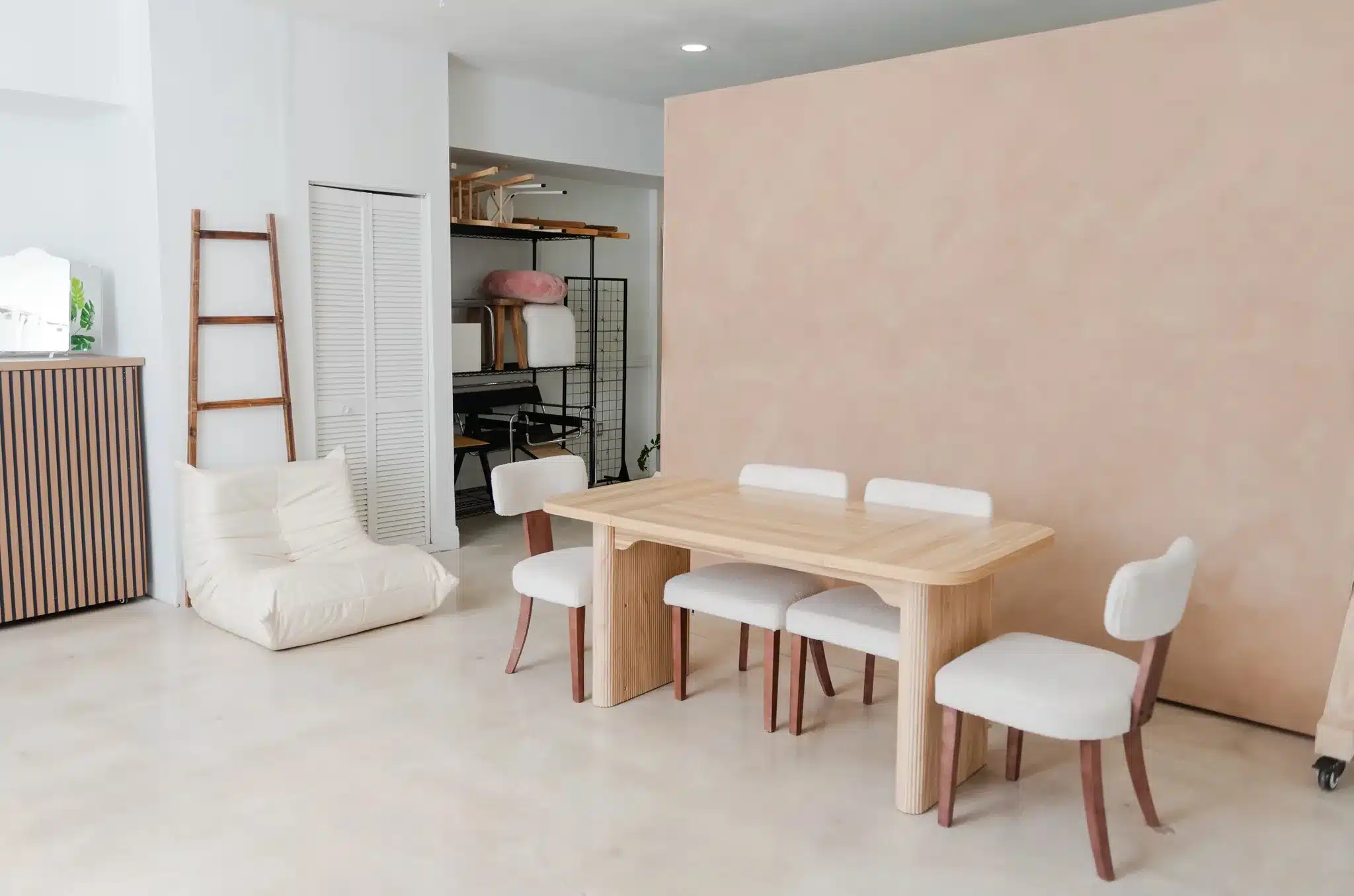
You cannot buy a styled set and carry it home, which is part of the point. CC Studios keeps several styled sets plus a props library on site, so you can shoot a clean cyclorama frame and a warm lifestyle frame in the same booking without moving locations.

The best backdrop for your shoot
The fastest way to choose is to start from what you are shooting. Here is the short version.
| Shoot type | Backdrop that works |
|---|---|
| Corporate headshots | Gray or white seamless, or a clean cyclorama |
| Portraits and family | Muslin, natural-light set, or soft gray |
| Product and e-commerce | White seamless or cyclorama for pure white, color paper for lifestyle |
| Fashion and editorial | Cyclorama, bold color paper, or an arches set |
| Content and personal branding | Styled sets, color paper, and the arches set for variety |
For deeper, shoot-specific advice, our guides go further on corporate headshot backgrounds, portrait sessions, and product photography setups.


How big should your backdrop be?
Size is where home setups most often come up short. The rule of thumb: a single standing subject needs a backdrop at least 9 feet wide, which is the common 107 inch roll. A 53 inch roll only covers headshots and waist-up frames. Families and groups of three or more need the full 9 feet or wider, and for any full-length shot you also have to cover the floor, since bare floor at the bottom breaks the clean look.
Space matters as much as the roll. You want a foot or two between the subject and the background to keep shadows off it, plus room behind the camera for a portrait lens, which puts the working depth of a real full-length setup around 14 to 15 feet. Most living rooms do not have it. The cyclorama at CC Studios is 25 by 20 feet, so full-body, groups, and movement are never tight.
Backdrop color, and what each one says
Color sets the tone as much as material does.
- Gray is the most versatile choice. It reads lighter or darker depending on how you light it, plays well with most skin tones and clothing, and edits cleanly. It is the default for headshots.
- White looks clean and corporate and is required for e-commerce, but it needs its own light to actually read white instead of gray.
- Black adds contrast and drama and suits editorial and fitness work, though it can lose shadow detail without careful lighting.
- Color makes a frame pop for fashion, brands, and social content. The catch is color spill: a saturated backdrop bounces its color onto your subject, so add distance between the two or expect a tint.
On skin tones, mid-tone and lighter backgrounds give stronger separation against deep complexions and hold shadow detail better. Whatever the look, avoid a background that closely matches the subject's skin or clothing, since that flattens the sense of depth. A painted cyclorama can also be matched to a brand's exact color, which a pre-made roll cannot.
Why your white backdrop looks gray, and how lighting changes everything
This is the most common backdrop problem, and it is not the paper's fault. If you light your subject well and do nothing to the background, the background falls darker and reads gray. A true white needs its own light, roughly two stops brighter than the subject, with a foot or two of separation so the subject does not cast a shadow onto it. For the pure white that marketplaces like Amazon require, you light the background up to white (RGB 255, 255, 255) separately from the product.
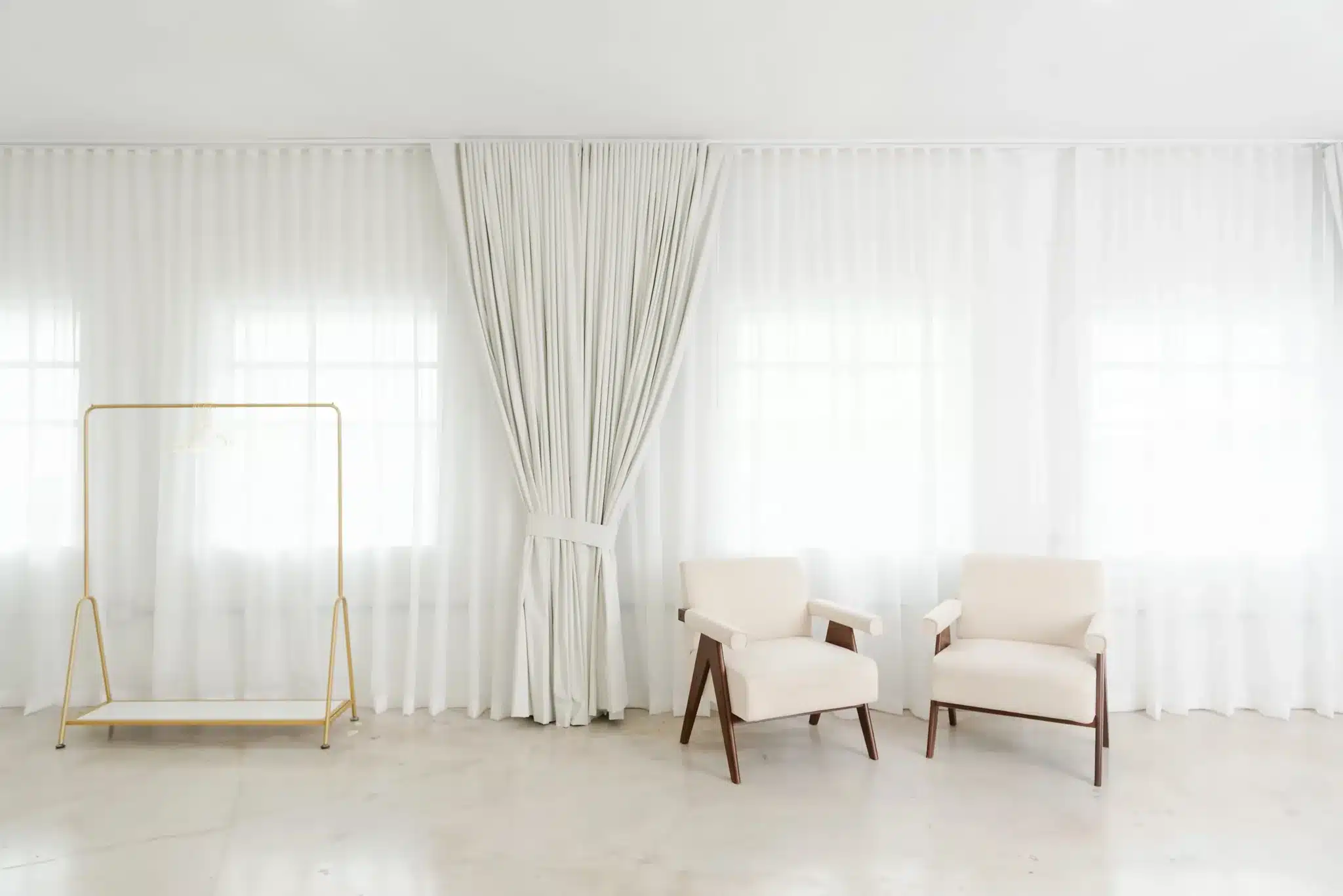
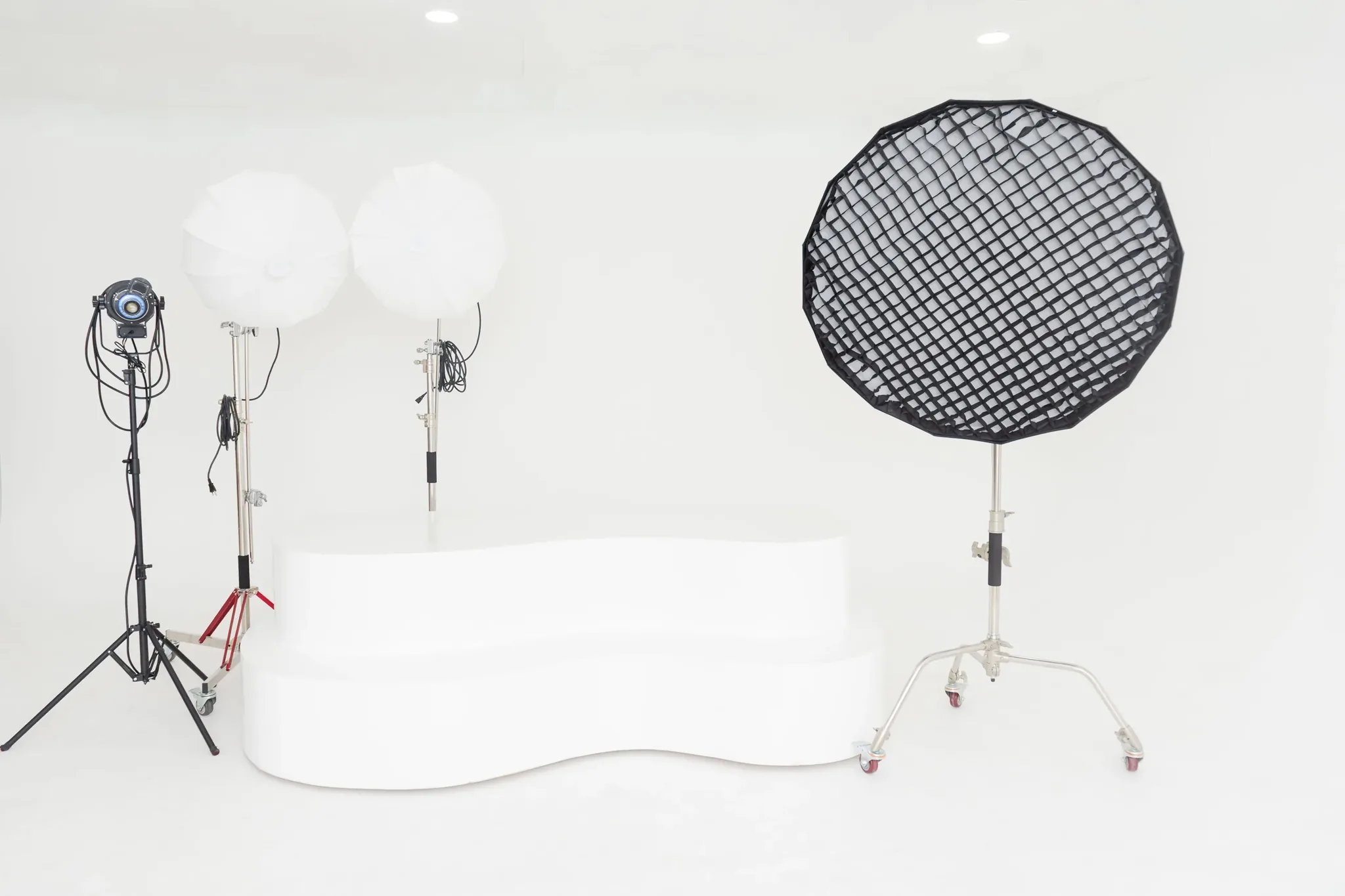
Material reacts to light too. Paper gives an even, matte field. Vinyl can throw back a hot reflection if a light hits it straight on. Muslin reads soft and textured. A cyclorama, lit with an even wash, gives the shadow-free sweep that makes a subject look like it is floating in white space. The practical takeaway is that the backdrop and the lighting are one decision, which is why shooting in a studio where the light is already dialed in beats guessing at home. CC Studios runs professional Godox and Profoto lighting plus GVM LED panels, set up for white, black, and color.
Should you buy a backdrop or book a studio?
If you are buying, be honest about how often you shoot. A backdrop setup, with stands, several colors, and the background lights to make white read white, only pays for itself if you shoot a couple of times a week in a fixed space. Below that, the math favors renting, especially once you add the parts nobody enjoys: storing a 9 foot roll upright so it does not crease, steaming muslin before every session, and replacing paper that tears.
| Consideration | Buy your own | Book a studio that has them |
|---|---|---|
| Upfront cost | $230 to $700 and up for a backdrop, a stand, and background lights | From $110 an hour, all included |
| Storage | A dry space to keep rolls upright so they do not crease | None |
| Variety | Only the colors you bought | Cyclorama, color paper, and styled sets in one booking |
| A cyclorama | Cannot be bought or moved | Included, 25 by 20 feet |
| Setup and lighting | You build it and light it | Already set up |
| Worth it when | You shoot the same look two or more times a week | You shoot occasionally or want variety |
That is the case for booking a studio that already owns every option. At Creative Canvas Photo Studio Miami the cyclorama, the color seamless rolls, the styled sets, and the lighting are already here and set up. You pick the look on the day, after you see what the light does, and you carry nothing home. The studio is in Glenvar Heights, central to South Miami and Coral Gables, with free parking and 24/7 booking. Rent the space from $110 an hour on weekdays and $130 on weekends, or book the in-house photographer from $350 and skip the gear entirely. If you are weighing where to shoot, our photo studio guide covers the options, and the rates page has the full pricing.
What to ask a studio before you book
If you are booking instead of buying, a few questions tell you whether a studio fits your shoot.
- What backdrops are on site? CC Studios has a 25 by 20 foot cyclorama, color seamless paper rolls, an arches set, a natural-light lounge, and styled sets.
- Can the cyclorama be painted a custom color? Yes, including green screen, arranged before your booking.
- Is the lighting included and set up? Yes, professional lighting is part of every booking.
- Can I use more than one backdrop in a session? Yes, the whole private studio is yours, so you can move between looks.
- Is it private? Every booking is private, with free parking and 24/7 access.
Frequently asked questions about photography backdrops
What is the difference between seamless paper, muslin, and vinyl backdrops?
Seamless paper is the standard for a clean background in any color, though it scuffs and tears so sections get replaced. Muslin is a woven cotton fabric that is durable and portable but wrinkles unless stored rolled and steamed. Vinyl is washable and water-resistant, common for newborn and food work, but it reflects light and shows marks.
What color backdrop should I use for portraits?
Gray is the most versatile portrait color because it is neutral, reads light or dark depending on how it is lit, and does not compete with skin tones or clothing. White suits high-key and corporate looks, while charcoal and black add drama. Avoid a background that closely matches the subject's skin tone, since it reduces separation.
Why does my white backdrop look gray in photos?
A white backdrop looks gray when it is not lit separately from the subject. A true white needs its own light, about two stops brighter than the subject, with some distance between subject and background. Shooting against an unlit white wall almost always produces gray, not white.
How big should a photography backdrop be?
For a single subject in a full-length shot, a backdrop at least 9 feet wide and 10 feet tall is the working minimum, plus floor coverage. Groups and movement need more. The cyclorama at CC Studios is 25 by 20 feet, large enough for full-body fashion, groups, and large props.
Does the backdrop color change the color of my subject?
Yes. A saturated backdrop reflects its color back onto a nearby subject, an effect called color spill. A red background can cast a warm tint onto a light shirt or pale skin. Neutral backdrops in white, gray, or black avoid this. If you use a bold color, add distance between subject and background to reduce the spill.
What backdrop is best for dark skin tones?
Mid-tone and lighter backgrounds create stronger separation against deep complexions and make it easier to hold shadow detail. White, cream, medium gray, and muted pastels all work well. Very dark backgrounds can suit high-contrast editorial work but need careful lighting to avoid losing detail.
How do I get wrinkles out of a fabric backdrop?
Steaming is the fastest method: hang the backdrop taut and work a garment steamer in slow passes from top to bottom. Store fabric rolled rather than folded to prevent creases. For shoots where wrinkles are not acceptable, studios pull a fresh section of seamless paper instead.
What backdrop options does Creative Canvas Photo Studio Miami have?
The studio has a 25 by 20 foot cyclorama in matte white, paintable to a custom color or green screen, plus seamless paper rolls in multiple colors, an arches set, a natural-light lounge, and styled lifestyle sets. All are included in the rental from $110 an hour, or with a Photoshoot Package from $350 with an in-house photographer.
Ready to shoot on any of them? Check availability and book the studio, or compare hourly rates and photographer packages on the rates page. Pick your backdrop on the day, and leave the storing and steaming to no one.
Book Your Studio Session
Rent the private 3,000 sq ft studio and its 25x20 cyclorama wall from $110/hr, or book a Photoshoot Package and our in-house photographer shoots it for you, from $350. Free parking, open 24/7, central to every Miami neighborhood.